+66 94 492 9264 we@wegoroundtravel.com TAT Licence 11/10587 · TTAA Member No. 2112 · Since 2009
WhatsApp LINE Facebook Instagram | ไทย  EN
HomeItinerariesThailand Temple Pilgrimage Tour: 3 Days
Central Thailand · Private Tour · 3 Days

Thailand Temple Pilgrimage Tour — 3 Days through Nakhon Pathom, Ayutthaya & Suphanburi

The world's tallest Buddhist stupa, a UNESCO World Heritage city buried in centuries of vines, and a sitting Buddha so large that a full-grown banyan tree grows through its lap. Three of Central Thailand's most sacred sites, one private vehicle, and a guide who knows when to speak and when to let the silence do the work.

3D2NDuration
from $990per person
Central ThailandRegion
Nov – FebBest season
4–6 peoplePrivate group
Starts & ends BangkokRoute
Phra Pathom Chedi — the world's tallest Buddhist stupa in Nakhon Pathom at dusk

The idea behind this trip

Most temple itineraries in Thailand treat sacred sites as items to photograph and cross off a list. This one is built around a different premise: that the value of a pilgrimage comes from arriving slowly, staying long enough to feel the weight of the place, and leaving with something that didn't come out of a guidebook. The route connects three provinces — Nakhon Pathom, Ayutthaya, and Suphanburi — that together trace a thousand years of Theravada Buddhism in Central Thailand. None of them are new to tourism, but all of them remain genuinely alive: monks chant in the mornings, incense burns in the afternoons, and market vendors who have sold lotus garlands in the same spot for thirty years will still stop to answer a question in slow, careful English if you ask politely.

The itinerary is sequenced with intention. You start in Nakhon Pathom, where Phra Pathom Chedi — standing at 127 metres, the tallest Buddhist monument in the world — sets a scale that recalibrates everything that follows. Day two belongs to Ayutthaya, the former Siamese capital whose ruins were declared a UNESCO World Heritage Site for good reason: nowhere else in Thailand does the physical evidence of greatness and its destruction occupy the same acre. You close in Suphanburi, where the ancient seated Buddha of Wat Pa Lelai has been in that position since the 14th century, undisturbed and unhurried — something like a reminder of what this whole journey has been about.

Day by day

Day 1Nakhon Pathom — Phra Pathom Chedi · Wat Rai Khing · merit-making at dusk

MorningPhra Pathom Chedi — The World's Tallest Stupa

The first thing you notice from the highway is that it simply doesn't stop growing. At 127 metres, Phra Pathom Chedi is the tallest Buddhist stupa on earth, and the closer you get, the more that fact becomes felt rather than merely known. The original structure dates to the 3rd century BCE, when this stretch of the Tha Chin River basin was among the earliest centres of Theravada Buddhism in Southeast Asia. The bell-shaped chedi that dominates Nakhon Pathom today was rebuilt under King Mongkut in 1853 over the original Dvaravati-era mound, encasing history inside history. Walk the wide outer terrace clockwise, stop at each of the four cardinal viharns to see the principal Buddha images in their respective postures, and observe the rhythm of ordinary Thai devotion — old women with lotus offerings, schoolchildren pressing their foreheads to the marble, monks in saffron walking in measured silence.

Best time to arrive: reach the terrace by 08:00 when light falls low across the gold-tiled surface and the morning cool has not yet lifted. The surrounding market wakes up around the same hour — fried dough, fresh coconut milk, and the best guava you will have all week.
Phra Pathom Chedi standing tall above Nakhon Pathom at dawn Devotees making offerings at Phra Pathom Chedi terrace

AfternoonWat Rai Khing — Lotus Ponds and the Art of Letting Go

Forty minutes southwest of Nakhon Pathom, Wat Rai Khing sits at the edge of a lotus-covered canal in the quiet district of Sam Phran. The temple is famous across Central Thailand for two things: a revered seated Buddha image dressed in a jewelled crown in the Ayutthaya style, and the tradition of releasing birds and fish as an act of merit. The fish-release pond behind the main viharn holds catfish and giant carp so accustomed to being freed that they rise to the surface when they hear footsteps. It sounds transactional until you're standing at the water's edge, the canal breeze carrying the smell of jasmine from the lotus plants, and you understand that the point is less about the fish and more about the deliberate act of releasing something. Wander the outer grounds where small shrines and spirit houses accumulate offerings from generations of supplicants — fresh fruit, flickering candles, hand-drawn lottery numbers.

What to buy before you leave: the stalls outside the gate sell small wire cages of rice sparrows for bird-release. Our guide explains the ritual context so the experience is participatory rather than just picturesque — typically 20–40 baht per cage.
Lotus blooms on the canal at Wat Rai Khing, Nakhon Pathom Revered Buddha image at Wat Rai Khing surrounded by offerings

EveningCheck In — Nakhon Pathom

Tonight's accommodation in Nakhon Pathom puts you close enough to Phra Pathom Chedi to hear the bells if the wind is right. After dinner — try the night market stalls on Ratchadamnoen Road, which serve the kanom jeen noodles and braised pork rice that the province has been quietly famous for — there is nothing required of you except to let the day settle.

Overnight: Boutique hotel or quality guesthouse in Nakhon Pathom city centre — walking distance to Phra Pathom Chedi, breakfast included
Day 2Ayutthaya UNESCO World Heritage — Wat Na Phra Meru · Wat Mahathat · Wat Chaiwatthanaram

MorningWat Na Phra Meru — The Temple the Burmese Didn't Burn

When the Burmese army destroyed Ayutthaya in 1767, they torched nearly every temple in the city. Wat Na Phra Meru survived because Burmese commanders used it as their headquarters — a survival that feels simultaneously lucky and uncomfortable. What it gives the modern visitor is something rare in Ayutthaya: a complete, functioning temple whose principal Buddha image has been sitting in its viharn continuously since the Dvaravati period, over a thousand years ago. The seated image in the main hall wears the royal regalia of a Khmer-influenced king — elaborate headdress, jewelled collar — rather than the simple monk's robe of most Thai Buddhas. There is scholarly disagreement about what this signifies; what is certain is that the image has a presence that a two-minute visit does not capture. Take your time. Sit down if the floor allows. Notice the carved wooden doors.

Local knowledge: Wat Na Phra Meru sits directly across the river from the Grand Palace compound. Arrive before 09:00 and you will likely have the main hall to yourself for twenty minutes before the tour boats arrive.
Wat Na Phra Meru main viharn and its ancient royal-style Buddha image, Ayutthaya Ancient carved wooden door detail at Wat Na Phra Meru, Ayutthaya

Mid-morningWat Mahathat — The Buddha Head in the Roots

Wat Mahathat was once the spiritual headquarters of the Ayutthaya kingdom — the temple where the Supreme Patriarch resided and the palladium that gave the city its religious authority. Today it is a field of toppled prangs, headless Buddhas, and broken laterite walls that somehow communicate grandeur more effectively than their intact originals might have. The single most visited image in Ayutthaya is here: a sandstone Buddha head entwined in the surface roots of a banyan tree, which has grown over and around it for so long that the two are now inseparable. Photographers queue to crouch down and frame the face against the roots. What they are less likely to notice is the scale of the surrounding ruins — the central prang would have stood over forty metres when complete, and the foundations of the wihan stretch so far that it takes several minutes to walk the perimeter. Walk them.

Dress code note: shoulders and knees must be covered — there is no rental sarong service here, so come dressed. The ground is uneven; closed shoes rather than sandals are strongly recommended.
Buddha head entwined in banyan tree roots at Wat Mahathat, Ayutthaya Ruins of prangs and broken statues at Wat Mahathat Heritage Park, Ayutthaya

Late afternoonWat Chaiwatthanaram — Ruins at the River's Edge

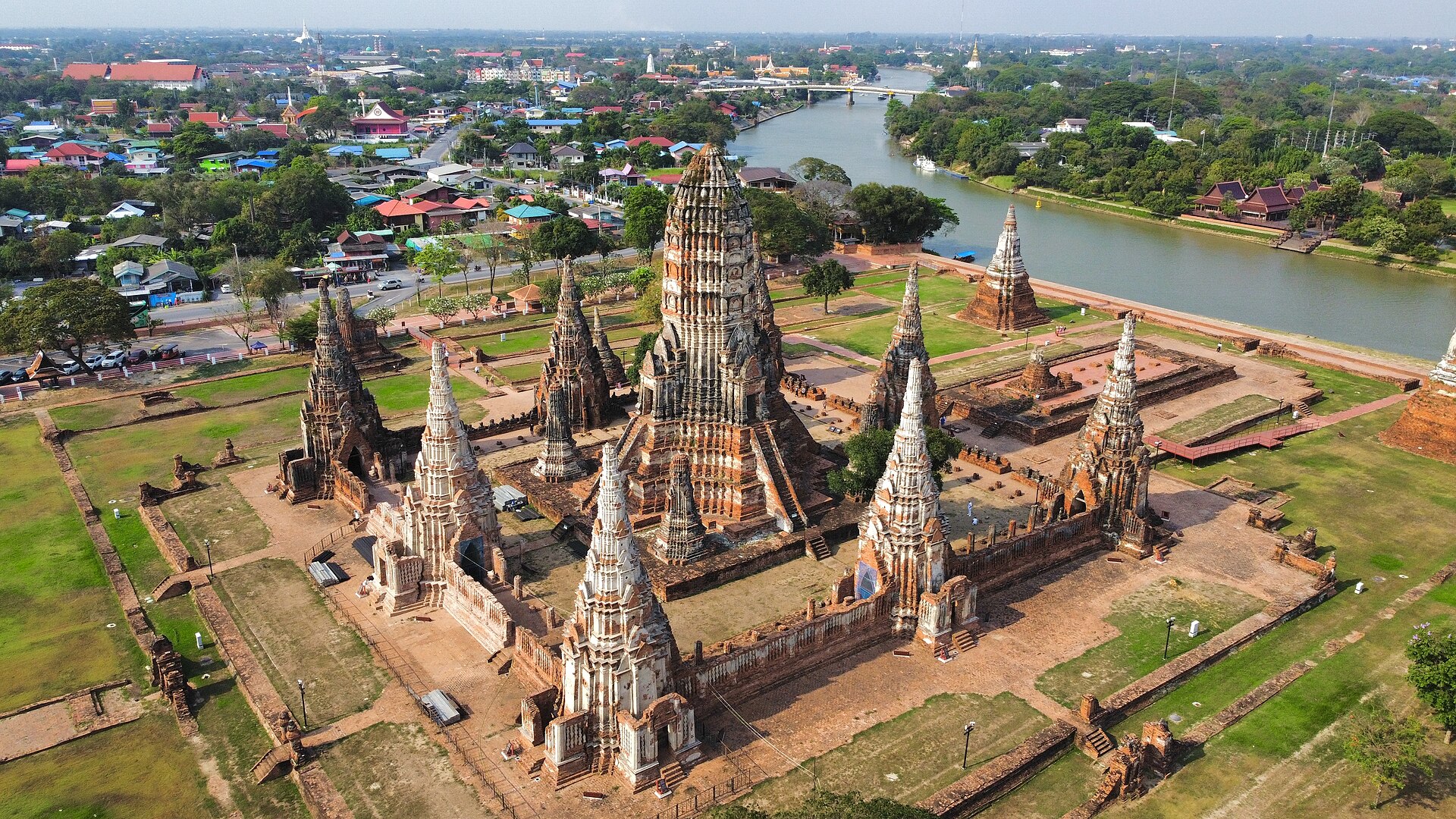
King Prasat Thong built Wat Chaiwatthanaram in 1630 on the west bank of the Chao Phraya River as both a royal memorial and a statement of Khmer-influenced cosmological power. The central prang represents Mount Meru at the centre of the Buddhist universe; the eight surrounding towers represent the outer continents. Today the structure is the most photographically compelling ruin in Ayutthaya — it photographs well at almost any hour, but the hour between 16:00 and 17:00, when the light goes orange and the river reflects the towers in long ribbons, is when visitors tend to stop moving and simply stand there. We build the day to arrive in that window. After dusk, the temple is lit by atmospheric floodlights and entirely changes character — if you can arrange a tuk-tuk after dinner, the night visit is worth it.

A note on crowds: Wat Chaiwatthanaram is popular. The northern corner of the grounds, facing the river directly, is almost always quieter than the central approach — walk around rather than through and you will have it largely to yourself.
Wat Chaiwatthanaram central prang and satellite towers in golden hour light, Ayutthaya Wat Chaiwatthanaram reflected in the Chao Phraya River at dusk

EveningOvernight — Ayutthaya

Dinner tonight is at one of the riverside restaurants along U Thong Road — fresh river fish from the Chao Phraya, steamed with lime and garlic the way this stretch of river has always prepared it. Our guide has a standing recommendation depending on the season. Ayutthaya at night, when the tour buses have gone home and the floodlit ruins glow above empty streets, has a quality that justifies staying rather than returning to Bangkok after dark.

Overnight: Boutique hotel in Ayutthaya city — walking distance to the historical park, river views available, breakfast included

Day 3Suphanburi — Wat Pa Lelai's ancient Buddha · Dragon Descendants Museum · return to Bangkok

MorningWat Pa Lelai — The Seated Giant Hidden in Plain Sight

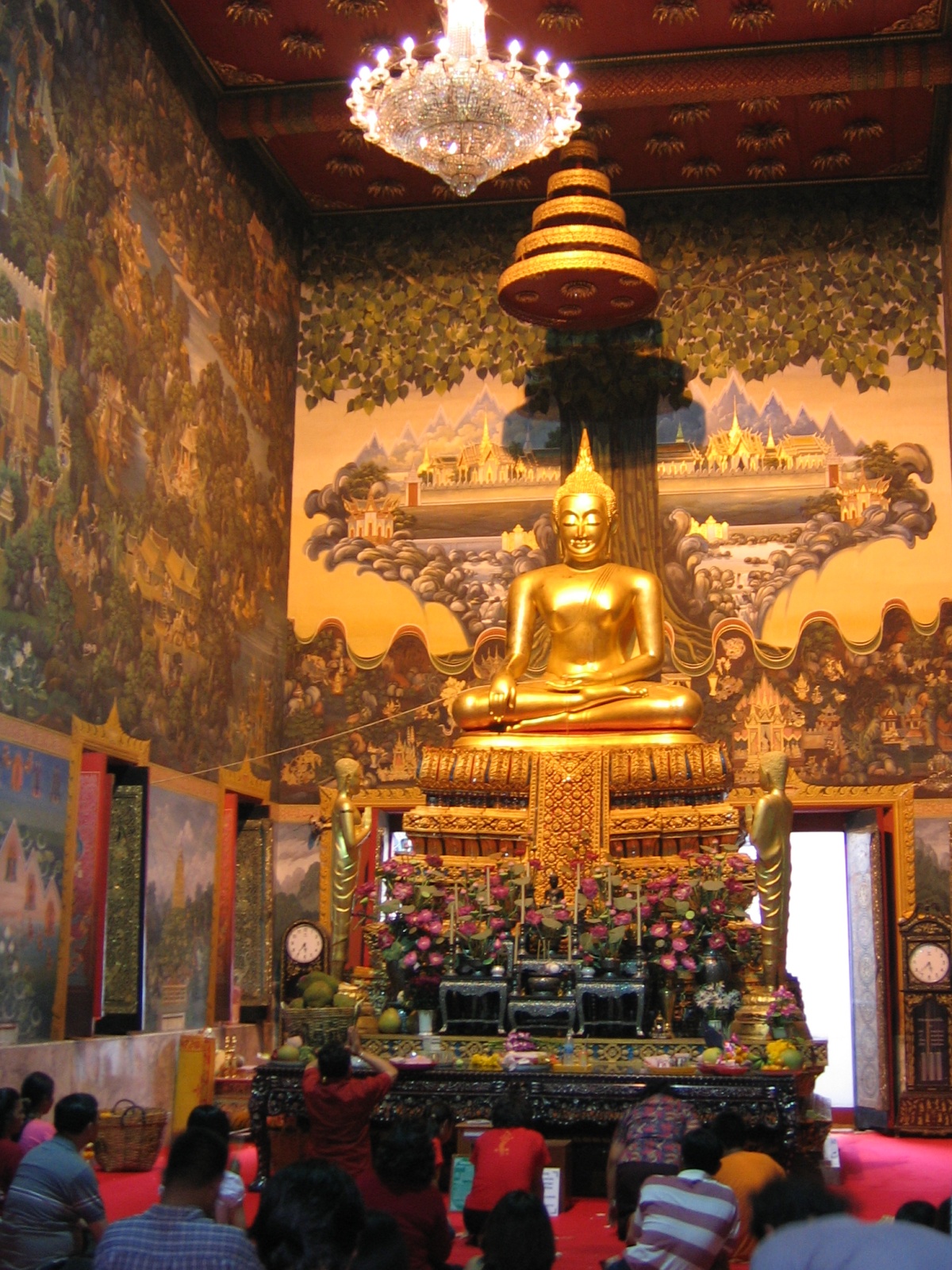
The drive from Ayutthaya to Suphanburi takes about an hour through flat rice plains and roadside spirit-house vendors. Wat Pa Lelai announces itself quietly — a modest gate, a car park, a few vendors selling flower garlands — and then you walk through the door of the viharn and the scale stops you. The Phra Buddha Pa Lelai is a seated Buddha image 23 metres tall in the Khmer-Sukhothai style, dating from the 14th century: one of the most authentically old and least altered major Buddha images in Central Thailand. Unlike the heavily restored or heavily gilded images at more prominent temples, Pa Lelai still carries the patina and proportion of its original carving. The large reclining Buddha in a side hall dates from the same era. Come with lotus flowers from the market at the gate — the act of placing them at the base of an image this old and this quiet is, by most measures, exactly what a pilgrimage is supposed to feel like.

Timing note: Suphanburi is only an hour from Ayutthaya, so a 08:30 departure puts you at Wat Pa Lelai before the mid-morning crowds. The province is less visited than Ayutthaya, which means you can spend an unhurried hour at the image without anyone rushing you toward the exit.
Phra Buddha Pa Lelai — the giant ancient seated Buddha at Wat Pa Lelai, Suphanburi Detail of 14th-century Buddha image at Wat Pa Lelai with flower offerings

Mid-morningDragon Descendants Museum (Baan Pun Manee) — Sino-Thai Life on the River

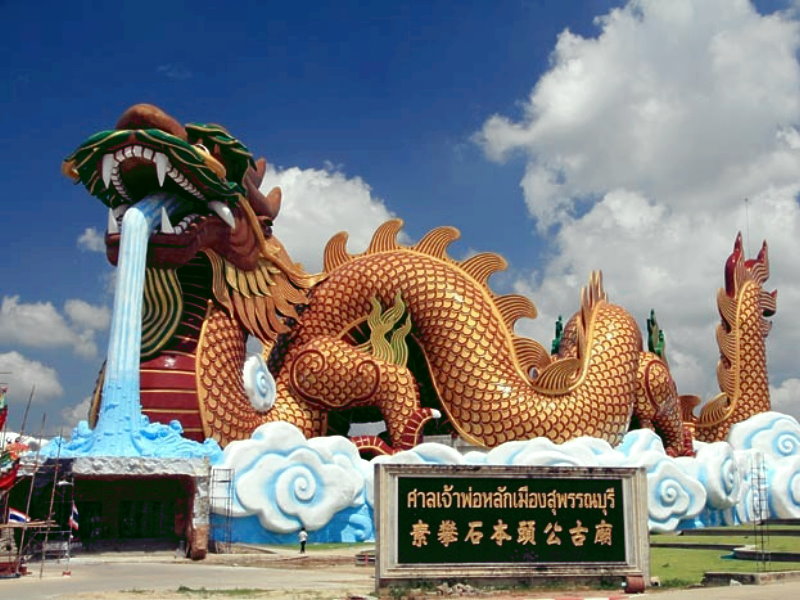
Suphanburi's Sino-Thai community has been woven into the province's fabric for at least three centuries, and the Dragon Descendants Museum — known locally as Baan Pun Manee — is the most thoughtful attempt to document that story. The building itself is a restored early-20th-century shophouse compound where original furniture, domestic objects, trade ledgers, and family photographs have been arranged into rooms that feel inhabited rather than curated. There is a particular room full of Chinese opera costumes and a small altar that smells of camphor and dried jasmine — the kind of space where the past feels genuinely present. Allow forty minutes; the docents speak enough English to answer questions.

Worth noting: Suphanburi is the home province of former Prime Minister Banharn Silpa-archa, and the town carries the distinctive infrastructure of political patronage — an unusually large museum building, oversized public monuments, and a dinosaur park visible from the highway. None of this detracts from the places described above; it just makes for interesting commentary en route.
Dragon Descendants Museum shophouse facade in Suphanburi Traditional Chinese-Thai domestic objects inside Baan Pun Manee museum

AfternoonReturn to Bangkok

The drive back to Bangkok takes roughly two hours depending on traffic — longer if you leave in the late afternoon and hit the expressway during evening rush. Our driver times the departure to avoid the worst of it, and the journey back through the Central Plains — flat, green, bisected by canals — gives the landscape a last chance to register before the city returns. We drop you at your Bangkok hotel, airport, or any agreed point. The journey is over; the merit, however you understood it, is your own.

What it costs

from $990 / person (฿34,000)
Private group of 4–6 · smaller groups available with supplement · international flights not included
TierWhat changesFrom (pp)
EssentialQuality boutique stays, all touring and guide included as described$990
ComfortSuperior rooms at each property, premium dining arrangements$1,280
BoutiqueFinest properties available, private cultural experiences, curated meals$1,830

Included

  • 2 nights' accommodation (boutique/guesthouse level)
  • Licensed English-speaking guide throughout
  • Private air-conditioned vehicle and driver
  • Daily breakfast at each property
  • All entrance fees to temples and museums
  • Merit-making materials (lotus flowers, bird-release cages)
  • Bottled water and snacks in the vehicle
  • Travel insurance (basic)
  • Bangkok hotel pickup and drop-off

Not included

  • International or domestic flights
  • Lunch and dinner (unless noted)
  • Alcohol and personal beverages
  • Personal shopping and donations
  • Gratuities for guide and driver (at your discretion)

This is a starting point — make it yours.

Every We Go Round journey is private and built entirely around your group's pace and interests. Popular ways to adapt this route:

Get my proposal — free, within 48h WhatsApp us

Good to know

Do I need to be Buddhist to join a temple pilgrimage tour in Thailand?

Not at all. Visitors of every faith — and none — find the sites on this route deeply worthwhile. Our guides explain the significance of each ritual and site in clear, plain language, and you are always welcome to observe respectfully, participate as much as feels natural, and ask questions. The pace is private, so there is no group pressure. What matters is curiosity and a willingness to slow down and pay attention.

What should I wear for visiting temples in Thailand?

Cover your shoulders and knees at every site. Lightweight linen or cotton is ideal for Central Thailand's heat. Remove shoes before entering all prayer halls — slip-on footwear makes this considerably easier over three days of multiple temple visits. If you arrive somewhere underprepared, vendors at the gate of major temples sell inexpensive cloth wraps. Socks matter in December and January when marble floors retain the cold of the night.

When is the best season for this trip?

November to February gives the most comfortable conditions — dry, clear days between 25–32°C, and the golden-hour light in Ayutthaya at its most dramatic. For a spiritually charged atmosphere, the day of Makha Bucha (February full moon) in Ayutthaya is extraordinary — thousands of devotees circumambulate the ruins by candlelight. We avoid mid-April around Songkran when Ayutthaya becomes extremely crowded. The rainy season (May–October) is manageable with a covered vehicle but adds unpredictability.

Is the trip suitable for older travellers or those with mobility concerns?

Largely yes. The main temple precincts are flat and paved. The exceptions worth noting are Wat Mahathat, which has uneven rubble surfaces, and Wat Chaiwatthanaram, which has raised stone platforms with steps. Our guide carries a foldable walking stick and adjusts the route on the day. The van is fitted with a step-up bar. Anyone who needs to skip a particular section can comfortably wait in the shaded cafe area near most major sites — we have never had a group where this was a significant constraint.

Keep exploring

Temple Pilgrimage · 3 days · from $990 pp Plan this trip